
Government of Canada SLE: How to Manage Test Anxiety, Prepare, and Request Accommodations
Preparing for your Government of Canada Second Language Evaluation (SLE) can feel overwhelming, especially when your career progression depends on achieving a Level B or C. Even well-prepared candidates can experience nervousness, self-doubt, or difficulty expressing themselves under pressure.
The good news? You don’t need to eliminate anxiety to perform well. Understanding the assessment, developing effective preparation habits, and knowing when to request accommodations can help you approach your SLE with greater confidence.
Why Does the SLE Feel So Stressful?
Test anxiety goes beyond simply feeling nervous. It can involve physical symptoms, such as a racing heartbeat or muscle tension, alongside psychological symptoms, including excessive worry, fear of failure, and difficulty concentrating.
According to Sawka-Miller, test anxiety refers to “the subjective experience of intense physiological, cognitive, and/or behavioural symptoms of anxiety before or during test-taking situations that interfere with performance.” Research suggests that this form of anxiety can have a meaningful impact on academic outcomes. In a meta-analysis synthesizing findings from 238 studies, higher levels of test anxiety were consistently associated with lower academic performance. The study further found that anxiety levels tend to increase when assessments are perceived as high stakes or have important consequences for students.
For federal public servants, the pressure can feel particularly intense when language results influence professional opportunities.
However, the Public Service Commission (PSC) emphasizes an important distinction: the Oral Language Assessment (OLA) evaluates your sustained ability to communicate across work-related language tasks, not isolated mistakes. Candidates may also briefly pause, ask for clarification, or jot down keywords, provided the flow of communication is maintained. In other words, one forgotten word or grammatical error does not automatically determine your result.
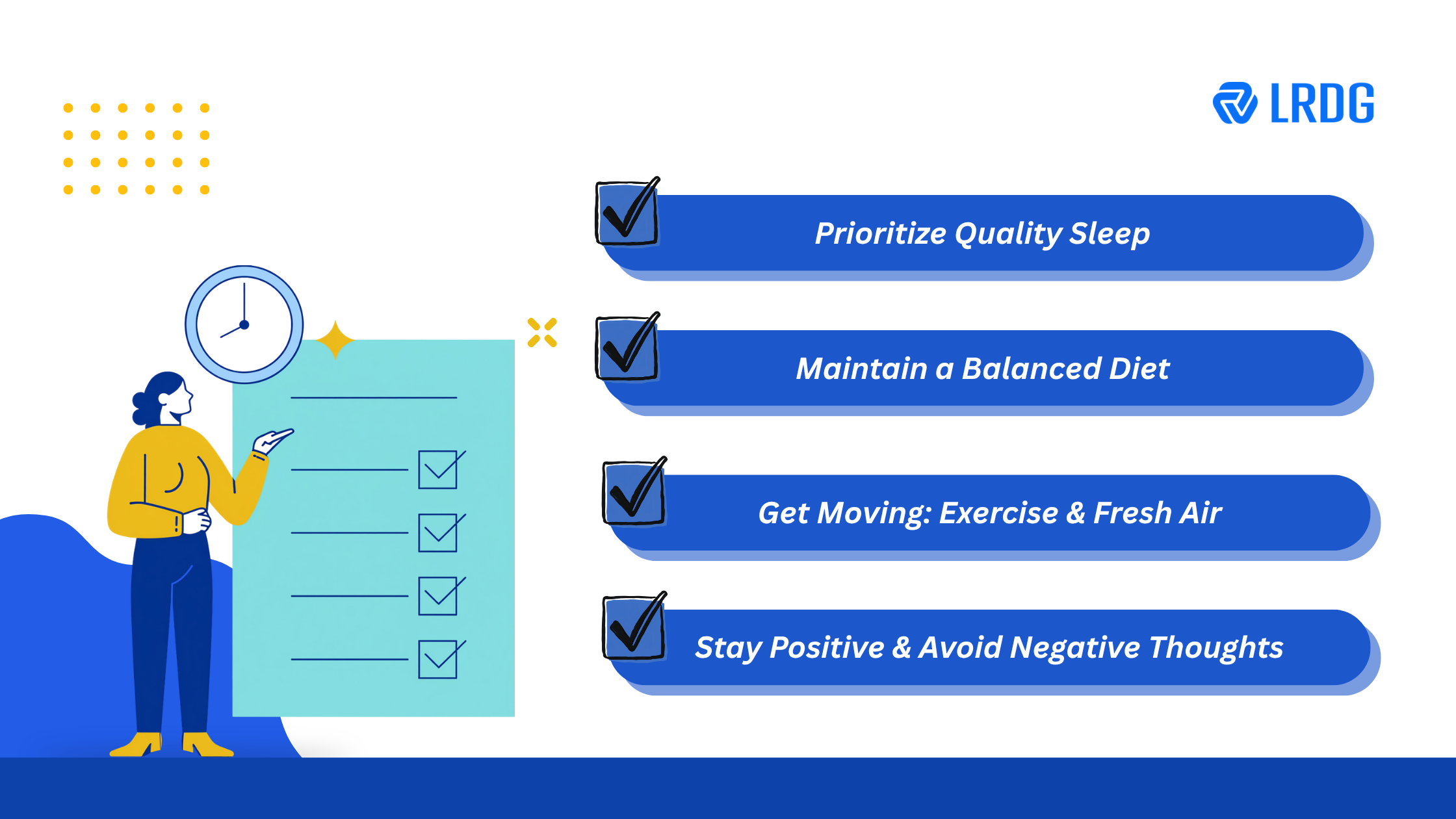
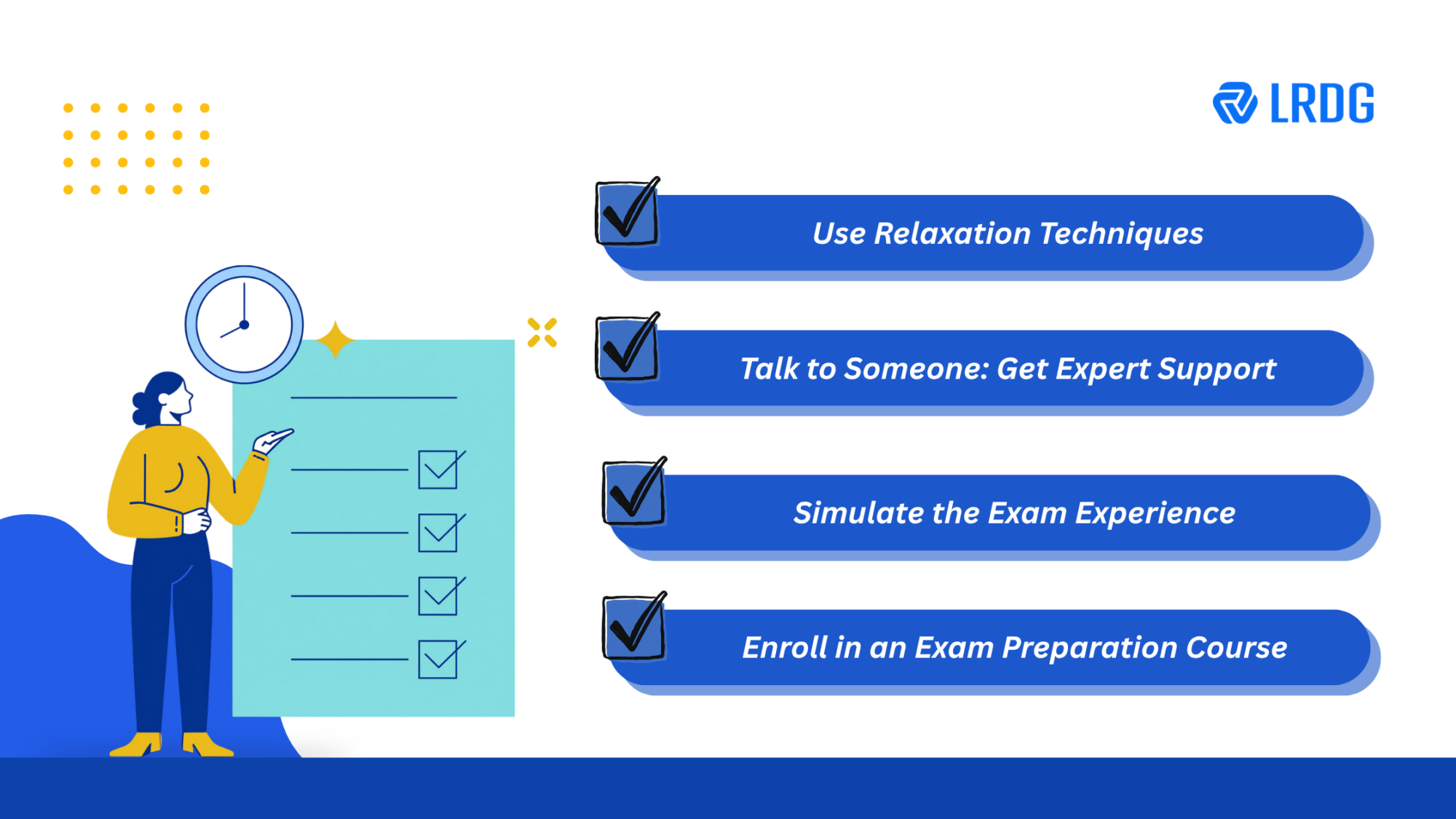
5 Practical Ways to Manage SLE Test Anxiety
Managing anxiety starts before your assessment and continues throughout the testing experience.
What To Do Before Your SLE
1. Practice breathing and relaxation techniques
Try different techniques during your preparation to discover what helps you feel calmer:
- Belly breathing: Breathe slowly, allowing your abdomen to expand and relax.
- Box breathing: Inhale, hold, exhale, and pause for four counts each, adjusting to your comfort.
- Alternate nostril breathing: Gently alternate breathing through each nostril without forcing or holding your breath.
Progressive muscle relaxation and guided meditation may also help you recognize and release physical tension. To make deep breathing work for you, it’s essential to listen to your body and be mindful of how anxiety is impacting your everyday life.
2. Take care of your physical well-being
Research suggests that overall well-being, including adequate sleep, good nutrition, hydration, and physical activity, can influence focus, energy levels, and readiness for learning. While nutritional or herbal supplements are sometimes promoted for anxiety management, evidence supporting their effectiveness for test performance is limited. Consult a healthcare professional before trying them.
3. Get comfortable with the test environment
Familiarity can reduce uncertainty for many candidates. Practice answering questions aloud, participate in mock assessments (SLE Simulations), and become comfortable with unexpected follow-up questions.
If your assessment takes place through Microsoft Teams, test your equipment and find a quiet, private space beforehand.
During Your SLE
4. Focus on communication, not perfection
Forgot a word? Explain it using simpler vocabulary. Made a grammar mistake? Correct yourself briefly, if necessary, then continue.
The PSC confirms that brief pauses, occasional mistakes, and temporarily losing your train of thought do not, by themselves, negatively affect your rating. Remember, your objective is to demonstrate your language abilities, through a conversation, not deliver a memorized speech.
After Your SLE
5. Reflect without overanalyzing
Once your assessment is complete, avoid replaying every answer in your head. Recognize the effort you’ve invested and identify what you can learn from the experience. Regardless of the outcome, your language development continues beyond a single assessment.
How to Prepare for Your SLE More Effectively
Effective SLE preparation means practicing the language skills you’ll actually need to demonstrate, rather than memorizing vocabulary without context.
Prepare for Your Target Language Level
Level B preparation
Focus on describing responsibilities, discussing past projects and future plans, and expressing opinions with supporting reasons. Practice communicating clearly about familiar workplace situations.
Level C preparation
Go further by analyzing hypothetical situations, defending opinions with nuance, and discussing complex or abstract workplace issues. Practice advanced structures, including the subjunctive where appropriate in French, while maintaining natural communication.
For more detailed guidance, explore our articles on:
- What is a BBB position
- How to score a CBC or CCC on the SLE
- Find the Best Government of Canada SLE Practice Tests
Use Official Resources and Practice Consistently
Start with the PSC’s free self-assessment tests for reading comprehension and written expression and review its official oral assessment guidance.
You can also strengthen your preparation by:
- Reading government publications and workplace documents in your second language.
- Listening to presentations and exploring relevant Canada School of Public Service resources.
- Practicing discussions about responsibilities, accomplishments, and workplace challenges.
- Studying consistently, even for 15–20 minutes daily, rather than cramming.
Prepare with Confidence Through LRDG
At LRDG, we believe effective preparation combines independent learning with meaningful human interaction. Our online learning platform, personalized tutoring, and SLE oral simulations (mock assessments) help learners practice workplace communication, receive constructive feedback, and identify areas for improvement.
Whether you’re targeting Level B or C, our goal is to help you build the skills and confidence to succeed on your first SLE attempt. Book a consultation today & find the preparation solution that best fits your goals.
SLE Accommodations: What You Need to Know
Not every candidate experience testing conditions in the same way. The Government of Canada provides assessment accommodations to help remove barriers and ensure candidates have a fair opportunity to demonstrate their language proficiency.
Here are four important questions about SLE accommodations.
1. Who Can Request SLE Accommodations?
Candidates with disabilities or conditions that affect their ability to complete an assessment may request accommodations. This can include physical, sensory, cognitive, or mental health-related conditions, including anxiety disorders when they create assessment-related barriers.
A formal diagnosis is not automatically required in every situation. The PSC reviews individual needs and may request supporting documentation from a healthcare professional, depending on the circumstances.
2. What Types of SLE Accommodations Are Available?
Depending on individual needs and the assessment, accommodations may include:
- Additional testing time or scheduled breaks.
- Accessible testing environments.
- Assistive technology or reader services.
- Alternative or adapted test formats.
- Other individualized adjustments approved through the assessment accommodation process.
Accommodations are determined case by case. Not every adjustment is available or appropriate for every test.
3. How Do You Request SLE Accommodations?
The process depends on the assessment and how it is administered.
For external applicants: Contact the person identified in your assessment invitation or staffing process and explain that you require accommodations.
For current federal public servants: Inform your manager or HR representative, particularly when renewing language results outside a staffing process.
For tests administered through the Candidate Assessment Tool (CAT): You can request accommodations directly through the platform after receiving your invitation. For CAT requests, candidates generally create an Assessment Accommodation Profile and submit their request before starting or booking the applicable test. Do not begin the assessment while your accommodation request is pending.
For detailed instructions, consult the PSC’s official Candidate Assessment Tool guidance.
4. When Should You Submit Your Accommodation Request?
As early as possible, ideally immediately after receiving your assessment invitation.
According to the PSC, accommodation determinations are usually processed within 10 business days after all required documentation has been received. Some adapted test formats may require an additional 15–40 business days.
These are estimates, not guaranteed timelines, and the PSC’s processing-times page is currently under review.
Starting early allows time to submit documentation, clarify your needs, and review approved arrangements before your assessment. For the latest requirements, visit the Public Service Commission’s assessment accommodation information.
Final Checklist Before Your SLE
Before assessment day, make sure you’ve covered the essentials:
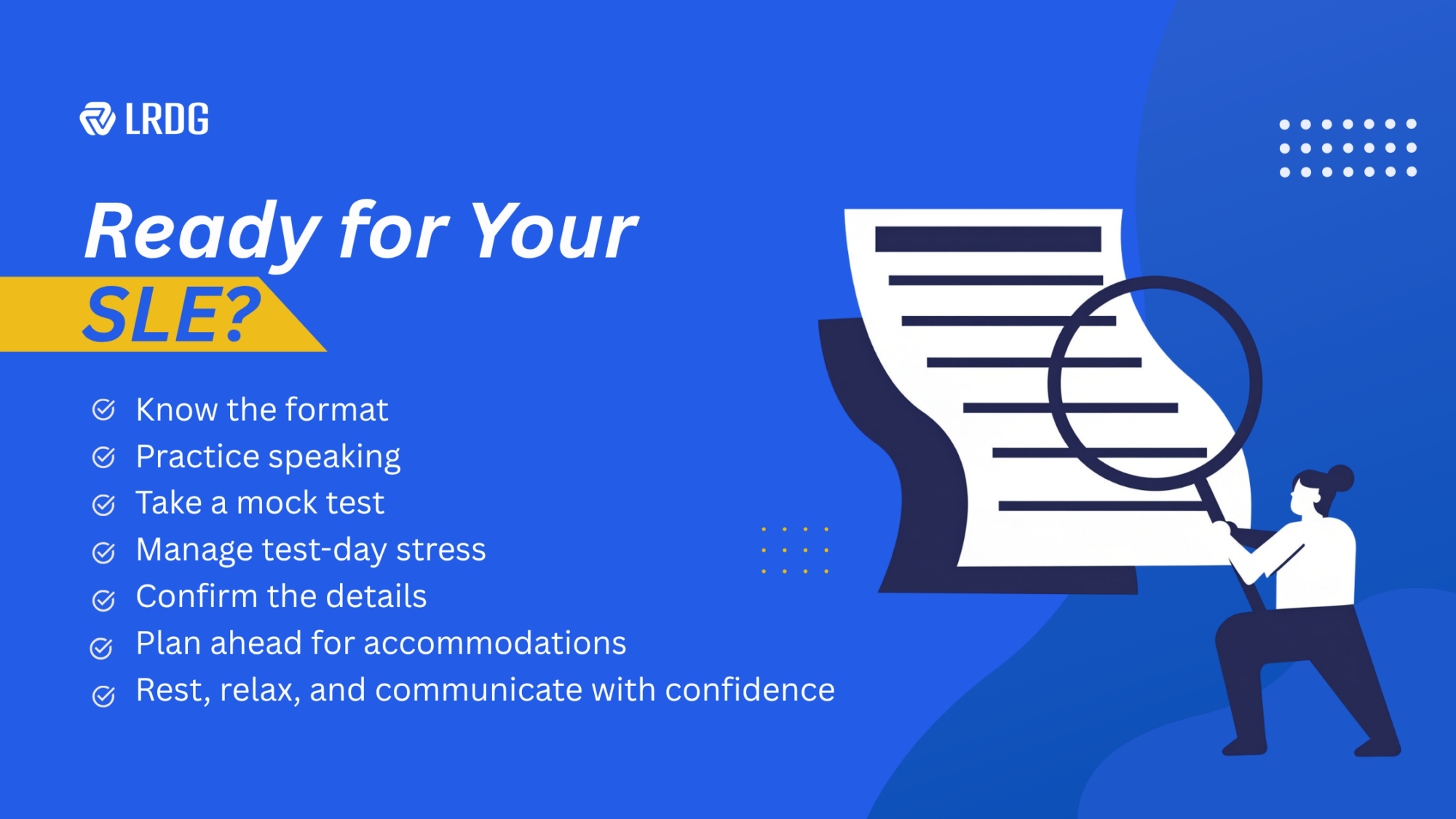
- Review the official test format and your target proficiency level.
- Practice realistic workplace conversations and questions.
- Complete practice exercises or an SLE mock assessment.
- Find relaxation techniques that work for you.
- Confirm your assessment details and test environment.
- Request accommodations early, if needed, and confirm arrangements.
- Prioritize rest and arrive prepared to communicate naturally.
Your SLE Success Starts with the Right Preparation
Feeling nervous about your SLE doesn’t mean you’re unprepared. With consistent practice, the right support, and a clear understanding of the assessment process, you can approach test day with greater confidence.
At LRDG, our SLE experienced tutors, flexible and personalized online training, and SLE simulations are designed to help you strengthen your communication skills and prepare for the results you’re working toward.
Ready for bilingual career success? Explore LRDG’s language training programs and connect with our team to find the preparation option that fits your goals.
Sign up for tips to help you learn, pass your PSC tests and achieve your levels.
Get inspiration to keep you motivated!
"*" indicates required fields