

How Busy Professionals Can Improve Their French or English with Micro-Learning
In Canada, and especially in Montréal, language is more than a skill. It’s an opportunity.
In this city, being bilingual isn’t just an advantage; it’s a way of life. French and English shape how we work, connect, and grow. From everyday conversations to corporate boardrooms, moving seamlessly between languages is part of Montréal’s identity and professional culture.
With two official languages, professionals who invest in French courses or business English training unlock new career paths, leadership opportunities, and greater mobility within the bilingual job market, from Montréal and Ottawa to Toronto and beyond. In fact, one of the greatest advantages of being bilingual is increased employability and earning potential, particularly in corporate environments where seamless communication across teams and regions is essential.
Yet there’s one major challenge: most professionals are busy.
Between meetings, deadlines, and family commitments, finding time for structured French corporate training or English lessons can feel overwhelming. Even when motivation is high, time is limited.
This is where micro-learning makes a difference.
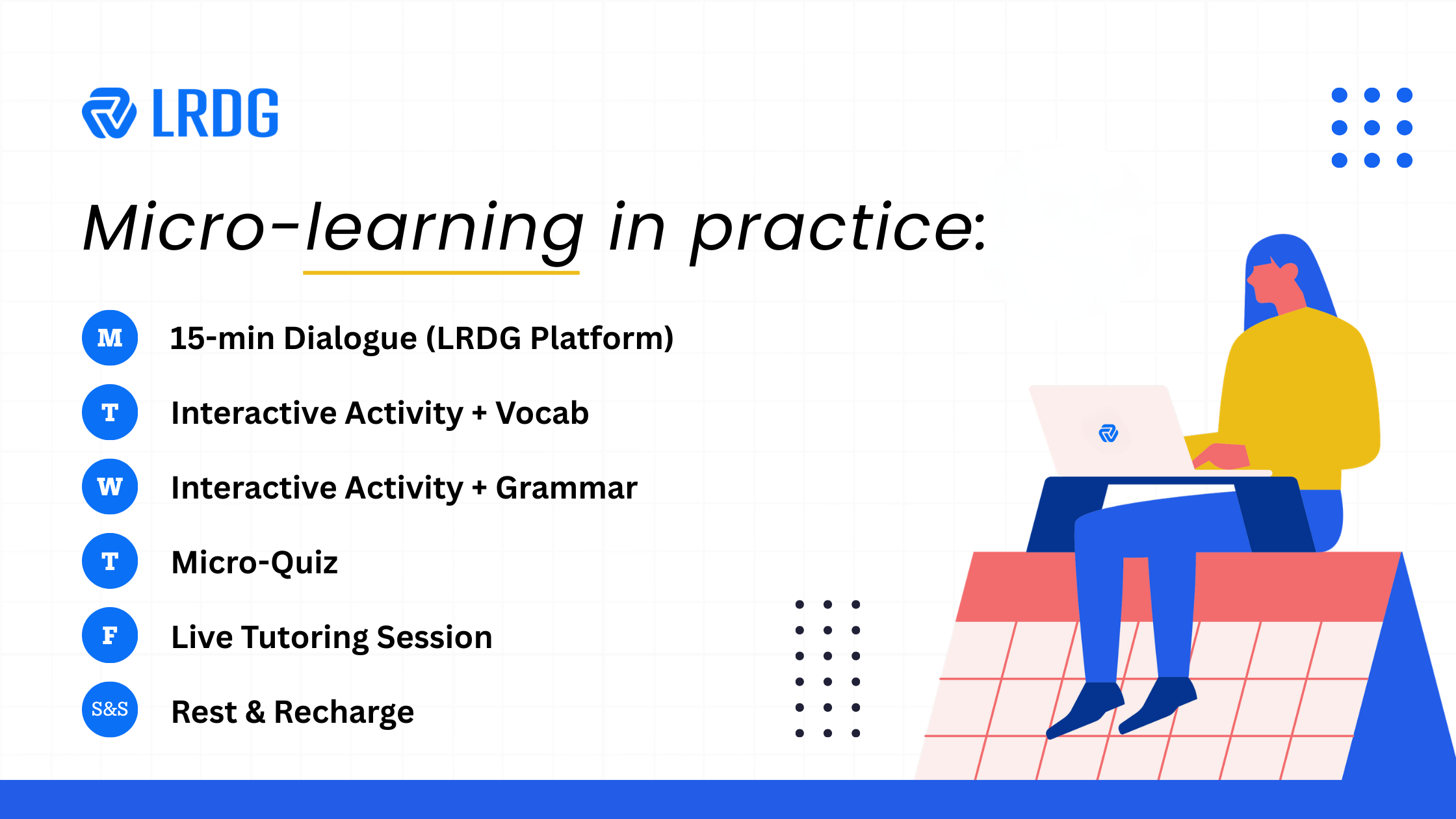
Instead of long classroom sessions, micro-learning delivers focused, engaging lessons in short, manageable bursts. It fits naturally into a professional’s schedule, making it ideal for adult learners and corporate teams alike. Let’s explore five practical micro-learning strategies that make French and English language training effective, flexible, and sustainable.
Why Micro-Learning Works for Language Training
Micro-learning is rooted in adult learning science. Research shows that shorter, focused learning sessions improve retention and reduce cognitive overload. According to studies on spaced repetition and memory, reviewing information in small intervals significantly strengthens long-term recall.
For professionals preparing for a language test such as the SLE (Second Language Evaluation), improving workplace communication, or navigating French for professionals in Montréal, micro-learning offers structure without disruption.
It’s also a powerful component of blended learning.
What Is Blended Learning?
If you’ve ever wondered about the blended learning definition, it simply means combining online digital learning with live instruction. The advantages of blended learning include flexibility, personalization, and stronger engagement, particularly in corporate environments. At LRDG, this approach integrates interactive online tools with live tutoring and pedagogical advisor support, creating a complete ecosystem for French and English training.
Now, let’s look at the five strategies.
1. Gamification: Turning Language Learning into Motivation
Learning a language requires consistency, and for busy professionals, staying motivated is often the hardest part. Gamification transforms the learning experience by introducing elements like points, levels, progress tracking, and small rewards. Instead of feeling repetitive, practice becomes dynamic and engaging.
If you look at the success of platforms like Duolingo, it’s clear that gamified learning works. By combining short lessons with streaks, progress indicators, and instant feedback, Duolingo has shown how powerful motivation and consistency can be when learning feels interactive and achievable.
Why it works:
- Encourages daily engagement
- Activates dopamine-driven motivation loops
- Makes vocabulary and grammar practice less intimidating
- Provides visible, measurable progress
Practical example:
A busy professional might spend just 10 minutes a day completing interactive French vocabulary challenges related to meetings, emails, or client communication. Over time, those small daily wins compound into real fluency gains.
For corporate teams, gamified modules introduce healthy competition while maintaining measurable progress, making them ideal for structured English and French corporate training programs.
At LRDG, we bring this same motivational power into a professional context. Our interactive platform integrates animation, gamified learning pathways, and bite-sized modules designed specifically for adult learners. The result? A learning experience that feels engaging, modern, and purposeful, not overwhelming.
When learners can see their progress, they stay committed. And consistency is what ultimately drives fluency.
2. Checklists: Turning Progress into Measurable Wins
Professionals thrive on clarity. In project management, success depends on defined milestones, measurable deliverables, and steady progress. Language learning should be no different. Instead of approaching fluency as one overwhelming goal, micro-checklists break it down into specific, achievable actions.
For example:
- Learn 10 industry-specific terms
- Practice one professional email template
- Review one targeted grammar concept
- Watch one 5-minute video lesson
Each task is small enough to complete in a short session, yet meaningful enough to move the learner forward.
Why it works:
- Reduces overwhelm by focusing on one clear objective at a time
- Creates visible, measurable progress
- Builds confidence through consistent, incremental wins
When progress is structured and trackable, motivation increases. And for busy professionals, momentum matters more than intensity.
3. Spaced Repetition: The Science of Retention
One of the most powerful micro-learning strategies is spaced repetition, reviewing material at increasing intervals over time.
Rather than cramming vocabulary before a test, learners revisit key words, expressions, and grammatical structures periodically. Each review strengthens neural connections, making recall faster and more reliable when it matters most, whether during a meeting, a presentation, or a client conversation.
Research consistently shows that spaced repetition significantly improves long-term retention compared to massed practice (often called “cramming”). By spacing exposure to new material over time, learners move information from short-term memory into durable, long-term recall.
Where flashcards come in:
Flashcards are one of the most effective tools for applying spaced repetition. When designed properly, they allow learners to:
- Actively recall vocabulary instead of passively reviewing
- Track which words are mastered versus which need reinforcement
- Review difficult terms more frequently
Digital flashcard systems take this a step further by automatically adjusting review intervals based on performance, ensuring weaker areas are revisited at the right time.
At LRDG, our interactive platform integrates these principles directly into the learning experience. Progress is tracked in real time, and the system intelligently reintroduces weaker vocabulary, structures, or concepts to reinforce retention. Learners don’t have to guess what to review next, the platform guides them strategically.
The result is smarter practice, measurable progress, and language skills that hold up under real professional pressure.
4. Video Tutorials: Flexible, On-Demand Learning
Not every professional can attend traditional classroom sessions. Short, bite-size, and focused video tutorials allow learners to:
- Review pronunciation
- Practice listening comprehension
- Understand cultural nuances
- Learn real-world workplace scenarios
Why it works:
- Fits between meetings
- Enables replay for better understanding
- Supports visual and auditory learners
For professionals working toward French proficiency, video-based micro-lessons can focus on specific workplace contexts: conducting performance reviews, presenting quarterly results, or managing client conversations.
For organizations implementing French corporate training, video tutorials standardize learning while preserving flexibility, a key advantage of blended learning programs.
With the LRDG platform, you gain access to 16 interactive modules designed to support every stage of your language journey; from Beginner (A Level) to Intermediate (B Level) and Advanced (C Level). Each module combines practical dialogues, engaging video tutorials, clear grammar explanations, and interactive features that reinforce learning in a dynamic and structured way. The experience is designed specifically for professionals who want measurable progress without wasting time.
Ready to move forward? Book a call and start your training today.
5. Micro-Quizzes: Reinforce and Measure Progress
Learning without assessment often creates false confidence. Progress feels real, but without testing recall, it’s difficult to know what has truly been retained. Micro-quizzes solve this problem by providing immediate feedback in a low-pressure format.
Why it works:
- Identifies gaps early
- Reinforces active memory recall
- Tracks measurable improvement
For professionals preparing for a language test or simply aiming to improve fluency in one of Canada’s official languages, short quizzes build readiness without adding stress.
For organizations, quizzes offer something equally important: visibility. They provide concrete data that helps HR and L&D leaders measure ROI and demonstrate the impact of language training initiatives.
At LRDG, this principle goes one step further. Each module concludes with an End-of-Module Exam (EOM) before learners progress to the next level. These structured assessments ensure learners can apply what they’ve studied, from vocabulary and grammar to practical communication skills, before moving forward. EOMs not only strengthen retention and accountability but also give managers clear insights into employee progress. The result is structured advancement, measurable outcomes, and language training that delivers real performance gains.
The Bigger Picture: The Benefit of Being Bilingual in Canada
In a bilingual country like Canada, mastering both official languages is more than a skill, it’s a long-term career investment.
The advantages of being bilingual extend far beyond communication. They include:
-
Greater career mobility
-
Access to broader national and international job markets
-
Stronger leadership opportunities
-
More effective cross-team collaboration
-
Increased confidence in public-facing and client-facing roles
In Montréal in particular, bilingual professionals consistently stand out, not only within local organizations, but also in national and global companies operating across Canada. But success doesn’t come from intensity, it comes from consistency, and consistency is exactly what micro-learning enables.
How LRDG Supports Modern Language Learners
Micro-learning strategies are powerful, but structure and support make them transformative.
At LRDG, our approach combines:
- ✔ Interactive online language platforms with gamification, quizzes, and spaced repetition
- ✔ Live tutoring sessions tailored to professional goals
- ✔ Expert pedagogical advisors who guide learners and corporate teams
- ✔ Customized French and English programs aligned with workplace realities
- ✔ A blended learning model designed for busy professionals
Whether you are:
- An individual seeking French language courses to grow your career,
- A professional entering the English-speaking job market,
- An organization investing in English or French corporate training,
- Or a team preparing for a language test such as the SLE.
Our programs integrate the advantages of blended learning with personalized guidance, ensuring real, measurable progress.
Ready to Elevate Your Bilingual Workforce?
Book a call with LRDG or explore our language programs to discover how we can support your team’s professional growth.
- Review our Frequently Asked Questions
- Explore our implementation guide
- Meet the experts behind our programs
In a bilingual country, language isn’t just a skill, it’s a strategic advantage.
Sign up for tips to help you learn, pass your PSC tests and achieve your levels.
Get inspiration to keep you motivated!
"*" indicates required fields