
Full-Time French Training for Federal Government Employees: What to Expect
Online French training for government employees, is an important step toward professional growth, career advancement, and meeting bilingual requirements within the public service. However, when employees first hear the term full-time French training, many are unsure what it actually involves and what their daily schedule may look like.
Is it similar to going back to school full-time? How intensive is it? How much self-study is required? And how do learners balance training with their personal responsibilities?
At LRDG, we have been supporting federal government employees across Canada for over 25 years through flexible, personalized online French training designed to meet each learner’s objectives, schedule, and learning style. With more than 50,000 learners over the years, our team has developed a proven methodology that combines live tutoring, guided self-study, and learner-focused support to help public servants build confidence and progress effectively in French. In this article, we will explain what full-time training is, how online French training for government employees works at LRDG, and what learners can typically expect throughout the online training process.
What Is Full-Time French Training For Public Servants?
Full-time French training is an intensive language learning format designed to help federal government employees improve their French skills through consistent daily practice and structured learning.
Unlike part-time French training, which is spread across a few sessions per week, full-time training focuses on daily immersion and accelerated progress. It is often chosen by employees preparing for second language evaluations (SLE), bilingual positions, or professional communication requirements within the federal public service.
You can read our SLE study guide to better prepare for your language evaluation.
At LRDG, full-time French training is delivered entirely online and combines live tutoring sessions with guided self-study time throughout the day. The objective is not only to help learners improve quickly, but also to create a sustainable and supportive learning environment.
Depending on departmental needs and learner objectives, training may include:
- Individual one-on-one tutoring
- Small group training sessions
- Personalized learning plans
- Flexible scheduling options
- Speaking, listening, reading, and writing practice
- Support for SLE preparation
- Guided self-study activities between sessions
Because every learner progresses differently, training is always adapted to the learner’s current level, goals, strengths, and areas requiring improvement. Get in touch with our team to learn more about our online training programs and learning solutions.

How Full-Time Professional French Training Works at LRDG
At LRDG, our full-time French training follows a structured yet flexible methodology designed to maximize exposure, engagement, and retention.
One of the key aspects of our approach is that learners work with three different tutors throughout their training schedule. We believe this gives learners the opportunity to experience different accents, communication styles, teaching approaches, and conversational dynamics, helping them become more comfortable and confident in real-life French interactions.
A typical full-time online French learning for Canadian civil service may include three tutoring sessions scheduled between 8:00 a.m. and 4:00 p.m. or 9:00 a.m. and 5:00 p.m., depending on the learner’s availability and organizational requirements. Other scheduling options may also be available upon the learner’s request.
Rather than scheduling tutoring sessions back-to-back, dedicated periods of independent study are intentionally incorporated between sessions to allow learners time to complete assignments and review the material, which will then be reinforced through oral practice during the tutoring sessions.
This structure creates a balanced learning rhythm while maintaining the intensity required for full-time language progression.
Because flexibility is an important part of our methodology, schedules can also be adjusted based on learner needs, departmental expectations, and personal circumstances. To learn more about the LRDG tutoring experience, discover our latest guide.
Why Self-Study Is an Important Part of Full-Time Training
Although live tutoring plays an important role in language development, self-study is equally essential during full-time French training. Independent study periods allow learners to familiarize themselves with the subject matter, develop new grammatical concepts, and integrate new vocabulary and useful expressions through a variety of interactive activities.
At LRDG, self-study is not designed to overwhelm learners. Instead, it acts as guided reinforcement that helps learners build consistency, confidence, and long-term retention between tutoring sessions. This combination of tutoring and self-study is one of the reasons why a structured hybrid methodology can be highly effective for intensive language learning. Explore our self-directed learning options and discover flexible ways to support your French training journey.
Full-Time vs Part-Time French Training
One of the most common questions learners ask is whether full-time or part-time French training is the better option. The answer depends on several factors, including timelines, professional objectives, departmental requirements, and personal availability.
| Full-Time French Training | Part-Time French Training |
| Daily intensive learning schedule | Fewer weekly sessions |
| Faster progression and immersion | Gradual progression |
| Significant self-study time | Manageable weekly workload |
| Often replaces regular work responsibilities temporarily | Easier to combine with a full work schedule |
| Structured daily routine | Flexible scheduling |
Full-time French training is often ideal for employees who need accelerated progress or are preparing for upcoming language evaluations. Because training takes place consistently throughout the week, learners are immersed in the language on a daily basis.
Part-time French training, on the other hand, may be better suited for learners balancing ongoing work responsibilities while improving their French over a longer period of time.
Both formats can be effective when paired with structured support, consistent practice, and personalized instruction.
Individual or Small Group Training: Which Option Is Best?
At LRDG, full-time French training may be offered either individually or in small groups, depending on learner needs and organizational decisions.
Individual training allows for:
- Personalized pacing
- Customized lesson focus
- Targeted support for specific language objectives
- Flexible adaptation to learner progress
Small group training, typically with two to four learners, offers:
- Interactive discussions
- Collaborative learning opportunities
- Increased conversational practice
- Shared motivation and engagement
In some cases, the training format may be determined by departmental or managerial decisions rather than learner preference. However, both individual and small group formats are designed to provide structured, supportive, and effective language learning experiences. To learn more about our different programs and training options, check out our detailed guide on tutoring sessions for learners.
Balancing Full-Time French Training With Work and Personal Responsibilities
Starting full-time French training can feel like a significant adjustment at first, especially for learners who are returning to structured learning after many years.
Although full-time training is intensive, it is important to remember that learners are not expected to manage a regular full-time workload alongside their training schedule. In many cases, full-time French training temporarily replaces regular work responsibilities so learners can focus on language development.
At the same time, balancing training with personal responsibilities and daily routines still requires consistency, organization, and realistic expectations.
At LRDG, we understand that every learner’s situation is different. Our team works closely with learners to create flexible schedules, personalized learning plans, and supportive training environments that help reduce unnecessary stress while maintaining steady progress.
Language learning is a gradual process, and building confidence takes time. With the right structure, guidance, and support, learners can develop strong language skills while maintaining a healthy balance throughout their training journey.
What Makes an Effective Full-Time French Training Program?
An effective full-time French training program is not simply about increasing the number of instructional hours. It is about creating a learning experience that is structured, personalized, engaging, and sustainable.
At LRDG, our methodology focuses on supporting learners through:
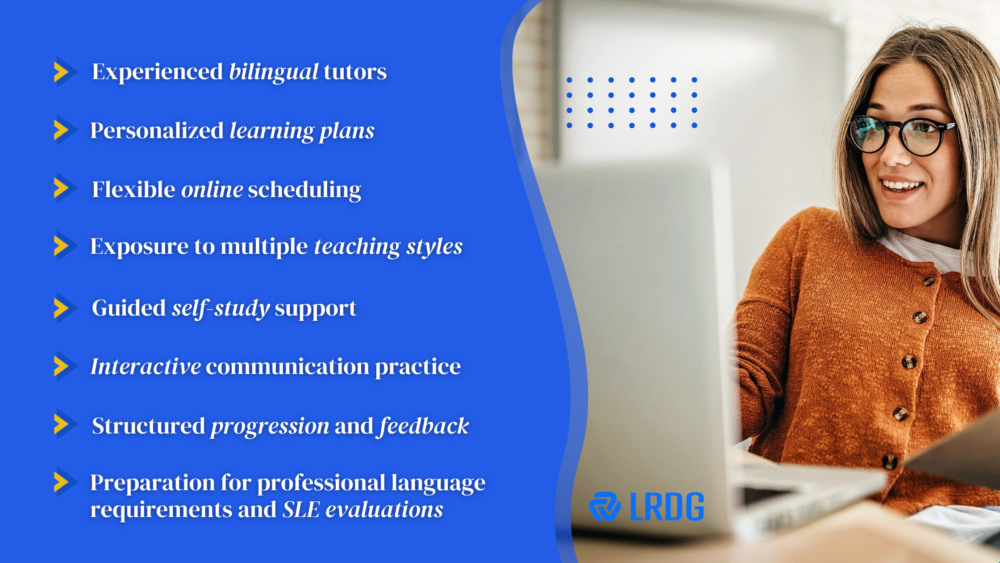
Because every learner has different strengths, challenges, and goals, training should always remain learner-centered and adaptable throughout the process.
Our objective is not only to help learners improve their French skills, but also to help them build confidence using the language in professional and everyday communication settings.
Frequently Asked Questions About French Language Courses For Public Servants
Yes. At LRDG, all full-time French training is delivered online, allowing learners across Canada to access flexible and personalized language training from wherever they are located.
Full-time French training includes a structured daily schedule with three tutoring sessions per day and guided self-study between sessions. Part-time training offers one to three tutoring sessions per week with a more gradual pace of learning. Both options include self-study to support ongoing progress.
In many cases, full-time French training temporarily replaces regular work responsibilities, allowing learners to focus fully on their language development during the training period. This means the training schedule generally takes the place of a regular 8:00 a.m. to 4:00 p.m. or 9:00 a.m. to 5:00 p.m. workday.
Start Your Full-Time French Training Journey Today
Full-time French training can be an excellent opportunity for federal government employees looking to strengthen their language skills, prepare for professional requirements, or build greater confidence communicating in French.
Although the process requires commitment and consistency, the right training structure and support system can make a significant difference in the learning experience.
At LRDG, we believe that effective language training should remain flexible, personalized, and learner-focused. Whether training takes place individually or in small groups, our objective is to help learners progress with confidence through structured online French training tailored to their needs.
To learn more about our full-time French training programs for federal government employees, contact the LRDG team or explore our available training options online.
Book a call with our team.
Sign up for tips to help you learn, pass your PSC tests and achieve your levels.
Get inspiration to keep you motivated!
"*" indicates required fields