
How Hard Is It to Reach BBB Level in French? Understanding Canada’s BBB Language Requirement
If you are pursuing a career with the Government of Canada, you have likely come across the term BBB language profile, particularly when applying for an imperative bilingual position. Whether you’ve recently accepted a bilingual position, are preparing for an upcoming Second Language Evaluation (SLE), or are exploring career opportunities within the federal public service, understanding what BBB means is an important first step.
The good news is that BBB is the most common bilingual language requirement across the federal public service. While achieving this level requires dedication, regular practice, and the right preparation, it is an attainable goal for thousands of public servants across Canada every year.
If you’re wondering what BBB means, how difficult it is to achieve, or what Level B French actually looks like, this guide will answer the questions most public servants ask before beginning their language training.
Before we begin, explore our full collection of SLE preparation guide for more guidance on the exam process. When you are ready to begin your bilingual journey, connect with the LRDG team to learn more about our language training and language evaluation services.
What Does BBB Mean in the Canadian Public Service?
Within the federal public service, bilingual positions are assigned a language profile made up of three letters:
- First B: Reading Comprehension
- Second B: Written Expression
- Third B: Oral Interaction
A BBB language profile means you must demonstrate Level B proficiency in all three language skills. Although each component is evaluated separately, together they measure your ability to work effectively in your second official language. In this article, we’ll focus primarily on the Oral Interaction component, as many learners consider it the most challenging part of achieving a BBB profile.
Looking for more information about each assessment?
Learn more about the SLE Reading Comprehension Test, SLE Written Expression Test, and SLE Oral Exam in our complete guides. For a complete overview of the SLE Oral Assessment, including its format, structure, and evaluation process, we recommend consulting the Government of Canada’s official guidance.
Why Is BBB the Most Common Language Requirement?
For many bilingual positions within the Government of Canada, BBB is the standard language requirement.
Bilingual positions are commonly found in professional, advisory and supervisory roles where employees are required to communicate, provide services, or supervise staff in both official languages. The specific language profile (such as BBB or CBC) depends on the duties of the position and the organization’s operational requirements.
Achieving a BBB profile not only helps you qualify for a wider range of positions, but it can also support career mobility, internal competitions, and future advancement within the public service. If you are planning a long-term career with the Government of Canada, developing proficiency in both official languages can expand your career opportunities. BBB is a common bilingual profile for many federal positions, although the required level varies depending on the role, responsibilities, location, and organization.
For related guidance, explore “Build a Bilingual Career in Canada” and “What Is a Bilingual Imperative (BBB) Position?”
French Language Levels Explained: A, B and C
Before focusing on Level B, it helps to understand how the three proficiency levels compare.
| Level | General Description |
| Level A | Communicates in simple, routine situations using basic vocabulary and straightforward sentences. |
| Level B | Communicates effectively in most workplace situations by explaining ideas, describing processes, discussing familiar topics, and participating in conversations with reasonable confidence. |
| Level C | Communicates comfortably in complex or abstract workplace situations, expresses nuanced opinions, negotiates solutions, and interacts with a high degree of fluency. |
One of the biggest differences between Level A and Level B is the ability to develop ideas. Rather than simply answering questions with short responses, learners at Level B are expected to explain, compare, justify, and maintain a conversation in a professional context.
So… How Hard Is It to Reach BBB Level in French?
This is probably the most common question learners ask, and the honest answer is:
It depends.
There is no single timeline or formula for reaching BBB because every learner starts from a different place. Your progress will depend on several factors, including:
- your current French proficiency
- previous exposure to the language
- how consistently you practice
- the quality of your learning resources
- opportunities to speak French regularly
- personalized feedback throughout your learning journey
For someone who already has a solid foundation in French, reaching BBB may simply involve strengthening workplace communication skills and building confidence when speaking. For others, especially those beginning with limited French experience, achieving BBB may require more structured learning and regular practice over time. Rather than comparing yourself to someone else’s journey, focus on consistent progress. Small improvements made regularly often lead to significant long-term results.
If you’re unsure where to begin, a professional language assessment can help determine your current level and identify the most effective path toward your BBB language profile. Learn more about our preliminary language evaluation and connect with the LRDG team to take the first step in your bilingual journey.
What Does Oral B Level Actually Look Like?
While BBB includes Reading, Writing and Oral Interaction, many learners find the oral component the most intimidating because it requires spontaneous communication. At Level B, you should be comfortable discussing familiar workplace topics and communicating your ideas clearly.
This may include talking about:
- your current role and responsibilities
- workplace procedures
- meetings and projects
- solving routine workplace problems
- explaining a process
- comparing options
- giving recommendations
- discussing familiar workplace situations
According to the Public Service Commission’s language standards, a person performing at Level B Oral Interaction can generally:
- understand the main points of clear, standard speech on concrete, work-related topics
- give simple descriptions of familiar situations
- explain ideas clearly
- compare alternatives when needed
- speak with some spontaneity, even if pauses are noticeable while organizing thoughts
In other words, Level B is about communicating effectively, not speaking perfect French.
What Evaluators Look for During the SLE Oral Exam
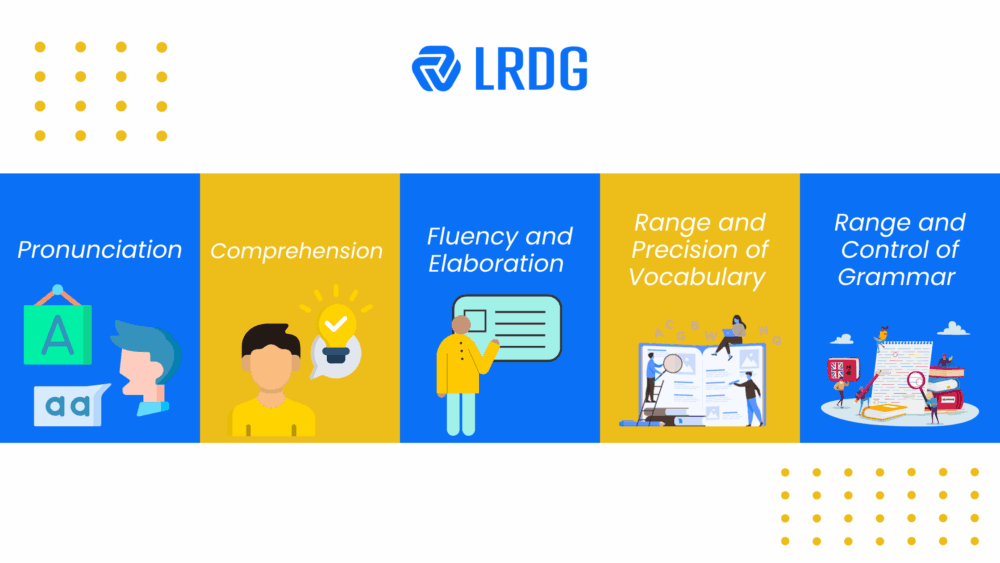
One of the biggest concerns learners have before the oral assessment is wondering exactly what evaluators expect. The oral exam is not designed to assess whether you speak like a native French speaker. Instead, evaluators want to determine whether you can communicate effectively in realistic workplace situations.
They generally assess whether you can:
- communicate your ideas clearly
- explain your reasoning
- maintain a conversation
- respond appropriately to follow-up questions
- self-correct when necessary
- use vocabulary appropriate for workplace situations
Evaluators also understand that learners naturally hesitate while speaking a second language. Pausing to think, searching for a word, or correcting yourself occasionally is completely normal. What matters most is your ability to keep communicating and successfully get your message across. Preparing for your official language assessment doesn’t have to be overwhelming. Meet our team of experienced tutors and evaluators and discover how LRDG can support you every step of your bilingual journey.
Common Challenges Learners Face at B Level
Many learners already know enough French to answer simple questions. The challenge is learning how to expand those answers naturally. Some of the most common obstacles include:
- giving answers that are too short
- organizing ideas logically
- using workplace-specific vocabulary
- connecting ideas naturally with transition word
- speaking confidently without memorized responses
- maintaining fluency under pressure
Fortunately, these are all skills that improve through regular speaking practice and constructive feedback.
Preparing for BBB French Success
Preparing for BBB is about much more than memorizing vocabulary or grammar rules. The goal is to build confidence in communicating in real workplace situations.
Some effective preparation strategies include:
- speaking French every day, even for 10 to 15 minutes
- describing your workday aloud
- explaining a process you know well
- practicing workplace scenarios
- expanding your professional vocabulary
- listening to French news, podcasts, or workplace discussions
- completing realistic oral practice activities
It also helps to build a mental toolkit of useful transition phrases such as:
- À mon avis…
- En ce qui concerne…
- Par conséquent…
- D’une part… d’autre part…
These expressions help organize your ideas and make conversations flow more naturally.
While independent practice is valuable, many learners also benefit from structured guidance and personalized feedback. Working with an experienced tutor can help identify areas for improvement, strengthen workplace communication skills, and build confidence before the official assessment. If you’re preparing for a Government of Canada language evaluation, explore our French language training programs, SLE preparation services, or preliminary language assessments to learn how we can support your learning journey. Book a consultation and get started today.
Can You Reach BBB Without Living in Quebec?
Yes. Many federal public servants successfully achieve their BBB language profile while living outside Quebec. With today’s online learning resources, virtual tutoring, and opportunities for conversation practice, learners across Canada can prepare effectively regardless of where they live. The key is consistency. Regular exposure to French, meaningful speaking practice, and personalized feedback can make a significant difference over time. If you’re interested in learning more about Montreal, Québec’s Francophone culture, or whether French is necessary to work in Montreal, we invite you to explore our related articles:
- Do You Have to Speak French to Work in Montreal?
- Building a Bilingual Career in Canada
- Celebrating Canada’s Bilingual and Francophone Culture
What Does a B-Level Response Sound Like?
One of the easiest ways to understand Level B Oral Interaction is to see examples of the types of responses expected during a workplace conversation.
Example 1
Question: Tell me about one of your responsibilities at work.
B-Level Response:
Je suis responsable de coordonner les réunions de mon équipe. Je prépare les documents nécessaires, je fais le suivi des échéanciers et je communique régulièrement avec les différents intervenants afin de m’assurer que les projets avancent comme prévu.
Example 2
Question: What would you do if two employees disagreed during a meeting?
B-Level Response:
Dans cette situation, je commencerais par écouter les deux points de vue afin de bien comprendre le problème. Ensuite, j’encouragerais une discussion respectueuse pour trouver une solution qui répond aux besoins de chacun. Si nécessaire, je proposerais un compromis ou un suivi après la réunion.
Example 3
Question: Describe a recent project you worked on.
B-Level Response:
Récemment, j’ai participé à un projet visant à améliorer notre processus de communication interne. J’étais responsable de coordonner les différentes étapes, de collaborer avec plusieurs collègues et de faire le suivi des échéanciers. Même si nous avons rencontré quelques défis, nous avons réussi à terminer le projet dans les délais grâce à une bonne collaboration.
Notice that these responses are not perfect or overly complex. Instead, they demonstrate the ability to explain ideas, organize information, support opinions, and communicate confidently in a professional context, all key characteristics of Level B Oral Interaction.
Frequently Asked Questions About the BBB Language Profile
BBB means achieving Level B proficiency in Reading Comprehension, Written Expression, and Oral Interaction; the three language skills evaluated for many bilingual positions in the federal public service. To learn more about Imperative BBB positions and how to prepare for the Second Language Evaluation (SLE), explore our latest articles and expert resources.
The level of difficulty depends on your previous exposure to French, and how consistently you practice. While every learner’s journey is different, regular speaking practice, personalized feedback, and structured preparation can significantly improve your chances of success. Talk to our team to learn more about our language training programs.
No. Evaluators are assessing your ability to communicate effectively in workplace situations, not whether you speak flawless French. Minor grammar mistakes, hesitations, or an accent are expected, provided they do not prevent clear communication.
Many learners consider the oral component the most challenging because it requires spontaneous communication and responding to follow-up questions in real time. However, every learner has different strengths, and some may find the reading or writing assessments more demanding. Discover what to expect on the French test, sample questions, and how to succeed with “What is on the SLE French Oral Exam?”
Yes. Many public servants successfully prepare through a combination of online self-study, live tutoring, conversation practice, and realistic exam simulations. With the right support and consistent practice, online training can be an effective way to prepare for the Government of Canada’s language evaluations. To learn more about LRDG tutoring experience, and French as a second language, get in touch with our team of experts.

Final Thoughts About the BBB French Level in Canada
Reaching a BBB language profile is an important milestone for many professionals working, or hoping to work, in the Government of Canada. While the journey looks different for everyone, success comes from consistent practice, meaningful communication, and a clear understanding of what evaluators are looking for.
Rather than aiming for perfection, focus on developing the confidence to communicate effectively in real workplace situations. With the right preparation and support, achieving your BBB language profile is a realistic and rewarding goal.
Ready to achieve your bilingual goals?
Book a call with the LRDG team today to explore our language training programs and Second Language Evaluation (SLE) services. Whether you’re just getting started or preparing for your official assessment, we’re here to help you prepare with confidence and succeed on your bilingual journey.
Sign up for tips to help you learn, pass your PSC tests and achieve your levels.
Get inspiration to keep you motivated!
"*" indicates required fields