

5 Difficult Words to Pronounce in French
A Pronunciation Guide for French Learners
Newly updated version – 2025
This article is one of our most popular resources. To go even further, check out our 2025 updated version, featuring more challenging words, audio examples, and advanced pronunciation tips.
Explore French as a Second Language programs at LRDG
Why Are Some Words So Difficult to Pronounce in French?
Mastering French pronunciation takes time and practice. The more you listen, speak, and observe how French speakers express themselves, the easier it becomes to notice and correct your own pronunciation mistakes.
In French, unclear pronunciation can make a word difficult to understand. That’s why it’s essential to practice regularly, especially when it comes to complex sounds and vowel combinations. At LRDG, we support learners at every level in developing accurate, confident pronunciation.
Want to progress faster?
Discover our French as a Second Language (FSL) programs designed to improve pronunciation and oral fluency.
Explore LRDG’s FSL and ESL courses.

The 5 Most Difficult Words to Pronounce in French
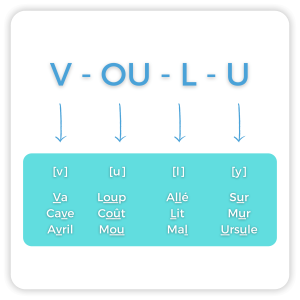
1. Voulu
The word “voulu” means “desired” in English. It is the past participle of the verb vouloir (to want) and can also be used as an adjective.
- As a past participle:
Il a voulu aller au marché tout·e seul·e. - As an adjective:
A very strong sense of standards can sometimes produce the opposite of the intended effect.
LRDG tip: practicing past participles in full sentences helps reinforce correct pronunciation naturally.
2. Cueillir
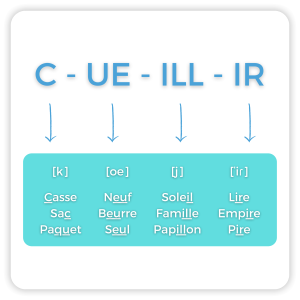
The verb “cueillir” translates as “to gather” or “to pick.”
Exemple: Je suis allé cueillir des fleurs.
To pronounce it correctly, keep your mouth slightly open, round your lips, and let your tongue touch your lower teeth.
In LRDG training sessions, tutors provide real-time feedback to help learners master challenging sounds like this one.
3. Oeil
An “œil” means “eye” in English.
Although it contains several letters, it is pronounced as a single syllable.
Mon œil me fait mal.
(My eye hurts.)
This word is a perfect example of how French spelling can be misleading when it comes to pronunciation.

4. Bouilloire
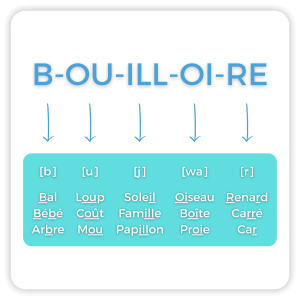
A “bouilloire” is a container used to boil water. In English, it is called a kettle.
Marie is heating water in the kettle to make tea.
The main challenge comes from the sequence of vowels in the first syllable, which requires careful articulation and rhythm.
Tip: break the word into parts, say it slowly, then gradually speed up.
5. Pays
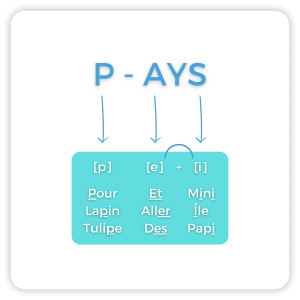
A “pays” means “a country.” Despite its spelling, it is pronounced [pei].
Many learners mispronounce this word because the written ending does not reflect its spoken form.
How Can You Improve Your French Pronunciation?
French pronunciation can be a real challenge, especially when you come across a difficult word or a sequence of complex sounds, even for highly motivated learners. But don’t worry, at LRDG, we are here to help you every step of the way on your language journey. Our qualified tutors work with you in sessions to correct your pronunciation in real time, and our online portal is full of interactive activities designed to help you practice the most complex sounds in French.

Ready to improve your French pronunciation?
Book a call with our team and find out how we can help you achieve your goals. And if you liked this article, don’t miss our updated 2025 version, with even more difficult words and practical tips on how to pronounce them better!
Frequently Asked Questions. Learning French with LRDG.
Who can benefit from LRDG training?
LRDG supports professionals who need to develop strong second-language skills to succeed in bilingual work environments, both in the Canadian public service and in corporate organizations.
Our training programs support:
- Managers wishing to improve their team’s language skills.
- Public service employees preparing for or maintaining bilingual positions through the Second Language Evaluation (SLE).
- Candidates preparing to enter the public service.
- Professionals in bilingual or multilingual workplaces seeking to improve their oral and written communication skills.
For organizations looking to develop language skills at scale, explore our corporate language training solutions.
How does the training work?
The LRDG course includes :
- Aninitial evaluation to determine your current level
- A customized training plan
- Access to an online platform with practical exercises
- Tutoring sessions for oral and written exams
- Pedagogical follow-up until you reach your objectives
This organization allows you to move forward at your own pace, while benefiting from a structured framework and expert support.
Est-ce que LRDG aide spécifiquement avec la prononciation ?
Yes. Pronunciation is at the heart of our courses. LRDG tutors work with you on difficult sounds, intonation, and fluency, with personalized corrections and practical exercises. In addition, you will have access to our online platform and can practice your pronunciation through various activities that are accessible anytime, anywhere.
Sign up for tips to help you learn, pass your PSC tests and achieve your levels.
Get inspiration to keep you motivated!
"*" indicates required fields